Recycling and Sustainability — Lawn Mowing Wimbledon
 At Lawn Mowing Wimbledon we place sustainability at the heart of every lawn care visit. Our Wimbledon lawn maintenance and grass cutting teams are trained to separate green waste on-site, reduce fuel use and prioritise recycling. By combining traditional lawn mowing in Wimbledon with modern, eco-conscious practices we create a tidy, healthy garden while protecting local parks and neighbourhoods. Our approach balances efficiency and environmental care, and we publish clear targets to measure progress. We also tailor methods for each property — from small front gardens to larger communal green spaces — to minimise material waste and encourage biodiversity.
We operate a dedicated sustainable rubbish gardening area for collected clippings, branches and organic debris. The site is organised so that wood, turf, and leafy material are processed separately: wood is chipped for mulch, turf is composted or reused, and leafy clippings go to approved composting streams. Underlining our commitment, we use mulching mowers where suitable and divert materials away from landfill whenever possible. Our waste handling also includes screening for contaminants and removing plastics or metal before processing so that recycled outputs remain high quality for re-use in community projects and local planting schemes.
 The local boroughs' approach to waste separation informs our procedures — residents around Wimbledon commonly separate glass, paper, plastics and food/green waste at source, and councils publish clear guidance on streams. We work with nearby household waste recycling centres and regional transfer stations so that garden waste collected by our Wimbledon grass cutting teams is taken to the correct processing facilities. Typical routes include municipal transfer stations serving the London Borough of Merton and neighbouring South West London sites; by coordinating with these centres we reduce double handling and ensure green waste goes to composting, anaerobic digestion or approved wood-processing units.
Targets and tracking
We have set measurable recycling targets to hold ourselves accountable. Our company targets include a 75% recycling rate for all garden and green waste collected and a 65% overall recycling target across operations within the next three years. These figures are ambitious but achievable through segregation, partnerships, and continual improvement of on-site practices. We also track key performance indicators such as tonnage diverted, percentage reused in community projects and transport emissions per job so customers can see tangible progress from Lawn Care Wimbledon.
 Partnerships with local charities and community projects are central to our sustainability model. Soft greenery and usable turf that are safe and healthy are offered to community gardens, allotments and local environmental charities for re-use. Excess woodchip and compost are donated to community planting schemes, while trimmings in poor condition are processed at approved composting centres. We maintain formal agreements with borough initiatives and grassroots groups to ensure materials are repurposed responsibly and to support tree-planting and biodiversity programmes across Wimbledon and nearby wards.
Our eco-friendly waste disposal area is designed to support a range of recycling activities relevant to the Wimbledon area. Common activities include:
- chipping branches for mulch and park pathways
- on-site composting for leaves and thin clippings that meet composting criteria
- segregation and removal of non-organic litter (plastic ties, packaging) for municipal recycling
- screening and testing soil to enable safe reuse as topsoil or soil conditioner
To cut carbon emissions we operate a fleet of low-carbon vans and vehicles dedicated to garden services. Our low-emission fleet mixes battery-electric vans, plug-in hybrids and high-efficiency diesel vehicles running on renewable biodiesel where electrification is not yet practical. Route optimisation software reduces unnecessary mileage and we schedule multi-property routes in Wimbledon to keep collections consolidated — a small change that yields big emissions savings across a season. Drivers receive eco-driving training and vehicles are maintained to maximise fuel efficiency and battery performance.
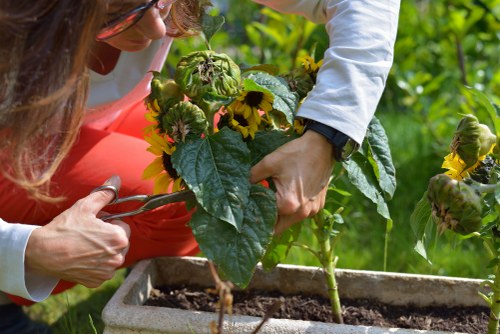 We also apply best practice in sustainable garden rubbish handling: delicate soils are returned to lawns or repurposed into soil conditioners, and large quantities of green waste are taken to biodigesters or industrial composting facilities where available. Working within the borough frameworks, we ensure hazardous items are never mixed with green waste and that contaminated loads are processed appropriately. We liaise with local transfer stations to prioritise low-traffic drop-off times and accept guidance from council recycling teams to meet local compliance expectations.